
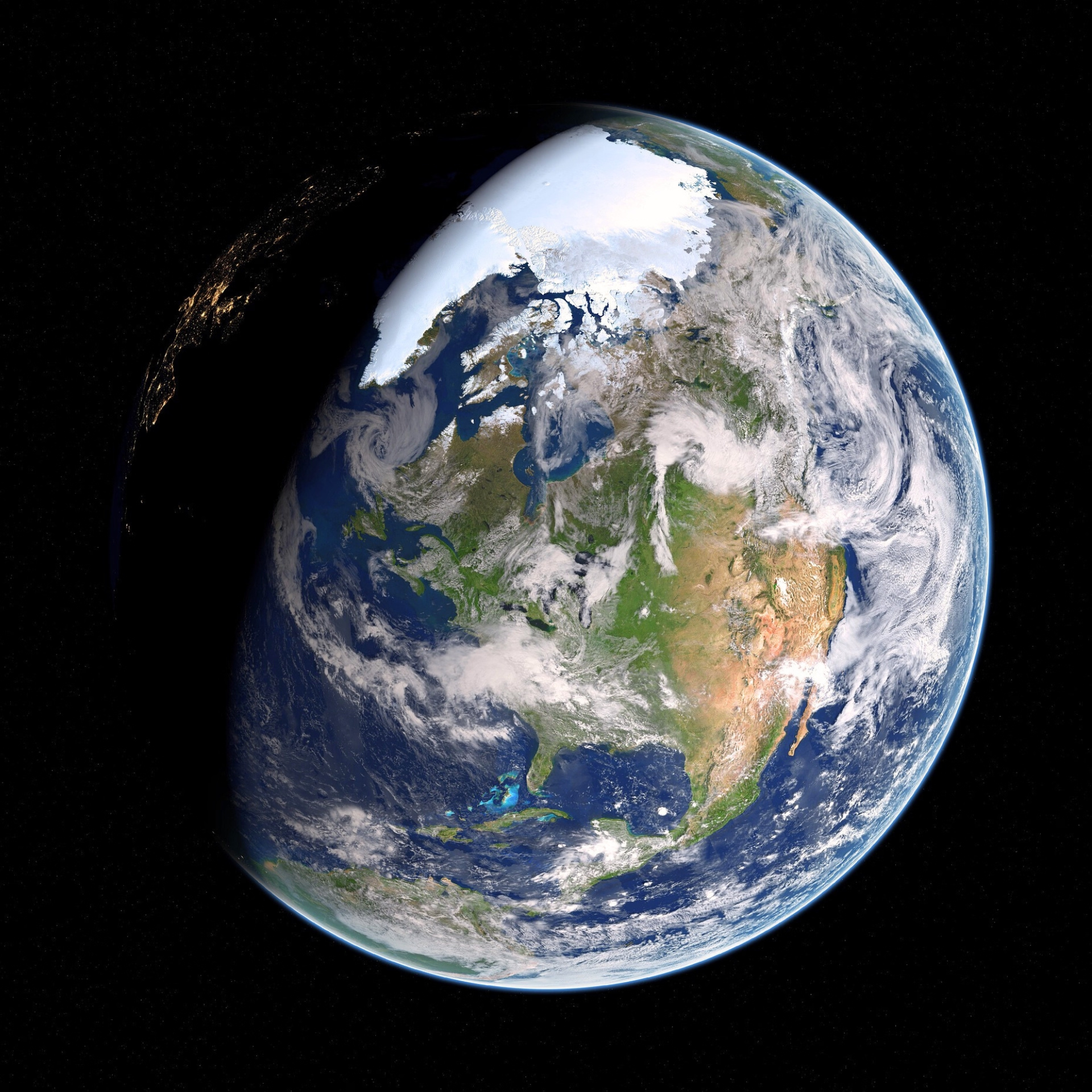
Introduction : The Only Planet with Life
Our solar system is home to many planets, but Earth is the only one on which life has been discovered to date. Earth’s atmosphere, water, air, and abundant energy resources create an ideal environment for life. That’s why Earth is often called “the home of life.” In this article, we’ll explore in detail how and why Earth supports life.
The Role of Water on Earth
Water is the foundation of life, and its abundance on Earth is one of the most important factors for the survival of life. Approximately 71% of the Earth’s surface is covered by water. Oceans, rivers, lakes, and groundwater play a vital role in the cycle of life. Living things cannot survive without water.
Water : The heartbeat of life
Where there is water, there is life. This is certainly true on Earth. Oceans, rivers, lakes, and groundwater together form a vast water system. Water is not only essential for the human body, but it also regulates the climate and transports nutrients. The presence of liquid water on Earth sets it apart from other planets.
Water and Biological Processes
- Water powers chemical reactions within cells.
- It also transports nutrients from one place to another.
- All living organisms, from humans to plants, depend on water.
- That’s why water is considered an essential element for all living things.
Ideal Distance : The Optimal Distance Between Life and the Sun
One of the most important characteristics of Earth is its ideal distance from the sun. Too close and water boils; too far away and everything freezes. Earth lies in this “habitable zone,” maintaining the optimal temperature for life. This distance is not just an astronomical fact; it is fundamental to the existence of life.
Seasons : The natural balance of time
The axial tilt and rotation of the Earth create the four seasons. These seasons not only affect the weather, but also determine the rhythms of life. Plant growth, reproductive cycles, and migration depend on the seasons. The changes of the seasons create order and diversity in life.
Plate Tectonics : A Dynamic Earth, Sustainable Life
The Earth’s surface is not static. Plate tectonics creates mountains, changes oceans, and shifts the distribution of minerals. This process is long and slow, but it preserves important elements in the atmosphere. This dynamic change has made the Earth habitable for millions of years.
Atmosphere: A Life Protecting Shield
- Earth’s atmosphere acts as a life-protecting shield.
- It blocks harmful ultraviolet rays from the sun.
- The atmosphere also helps maintain temperature balance.
Oxygen and Life
- Earth’s atmosphere is made up of approximately 21% oxygen.
- Oxygen is essential for breathing.
- Plants produce oxygen through photosynthesis.
- This is nature’s balancing system that sustains life.
The sun is Earth’s primary source of energy. Earth is located at the right distance from the sun to support life. Solar energy makes photosynthesis possible. This process is the basis of the entire food chain.
Earth’s gravity holds the atmosphere and water together. Gravity provides stability and balance to all living things. Without gravity, life would not be possible. Therefore, gravity plays a vital role in sustaining life.
Soil provides the nutrients plants need to grow. Soil microorganisms maintain natural cycles. Agriculture and food production depend on soil. This has made it possible for human civilization to develop. There are millions of species of plants and animals living on Earth. Each species plays a specific role in its ecosystem. This biodiversity maintains environmental balance. If it is lost, ecosystems can become unstable.
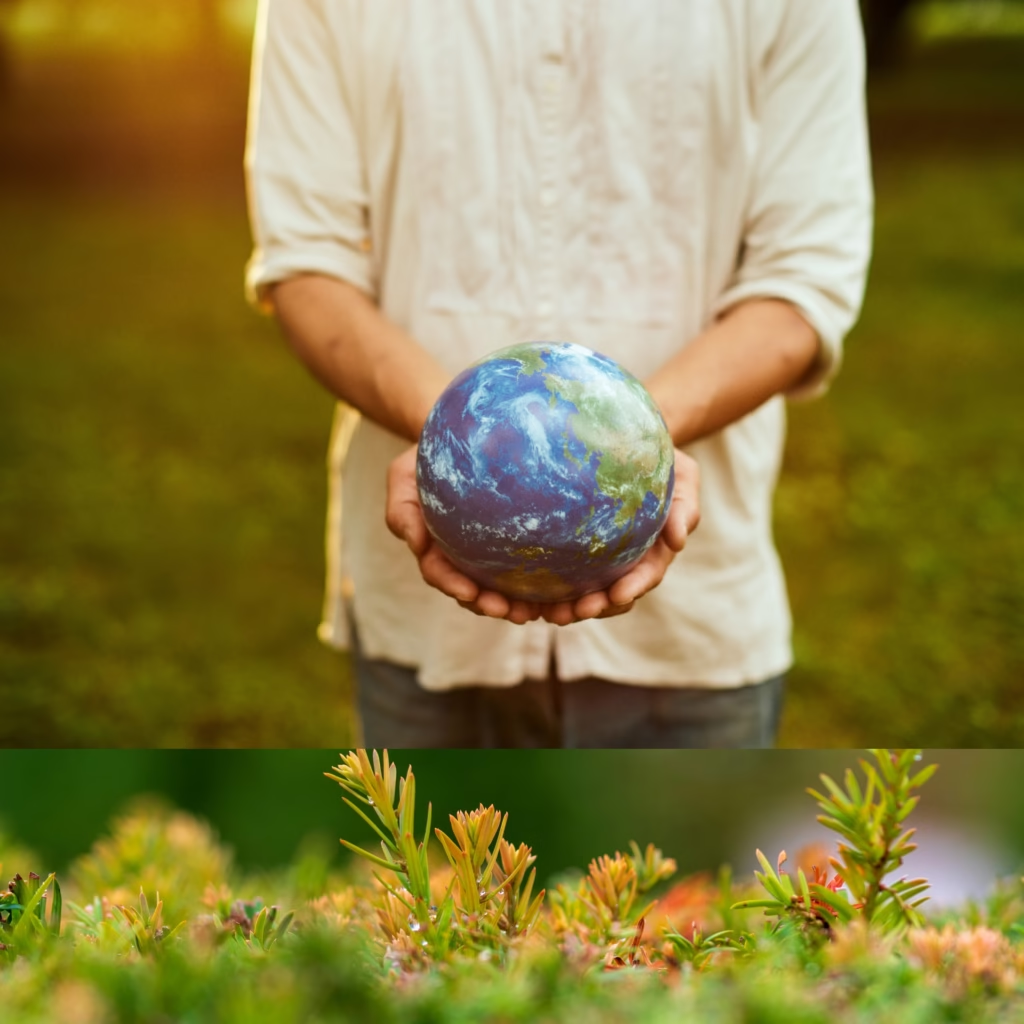
Biodiversity : The Symphony of Life
Life on Earth is not limited to humans. Billions of species form a complex, balanced system. Every living thing, from tiny insects to giant whales, contributes a note to this symphony. Biodiversity gives the Earth resilience, allowing it to sustain life in the face of change.
Human activities are disrupting the Earth’s natural balance. Pollution, deforestation, and climate change are serious problems. These issues undermine critical systems. Swift reforms are therefore essential.
Soil : The Foundation of Life
Earth’s soil is more than just dust. It is the foundation of all life. Plant growth, food production, and ecosystem integrity depend on it. Microorganisms in the soil recycle nutrients and support the survival of life. Healthy soil promotes healthy civilizations. The Carbon Cycle: The Hidden Art of Creating Balance.
The Earth’s carbon cycle maintains a delicate balance. Plants absorb carbon dioxide, and animals and humans absorb oxygen and exchange energy. This cycle contributes to a stable climate and allows life to thrive. If this balance is disrupted, the entire planet is at risk.
Magnetic Field : The Invisible Shield
Earth’s magnetic field deflects deadly solar winds. Without this shield, our atmosphere would slowly evaporate into space, and life would become impossible. This magnetic field protects us in ways that we don’t notice in our daily lives, but without it, our survival would be threatened.
Earth’s magnetic field protects us from harmful particles from the sun. It also keeps Earth’s atmosphere healthy. Without this protection, Earth would be barren. It’s an invisible shield that protects life.
Atmosphere : Life’s Invisible Shield
Earth’s atmosphere acts as a shield, protecting us from external threats. It provides us with the oxygen we breathe, filters out harmful ultraviolet rays, and maintains the planet’s temperature balance. Without an atmosphere, Earth would be as barren and lifeless as the moon. This invisible protective layer is our guardian.
Earth’s climate is favorable for life: it’s neither too hot nor too cold. Greenhouse gases help maintain temperature balance. But excessive pollution can upset this balance. Current human activities are affecting the Earth’s balance. Deforestation, pollution, and climate change are serious problems. These are weakening the systems that support life.
Earth’s Role as a Source of Life : A Biography of a Living Planet
Earth is more than just a planet. It is the cradle of life. Among the countless planets in the universe, Earth is a rare place where life not only exists but thrives. To view Earth as merely a collection of soil, water, and rocks would be to overlook its immeasurable value. Earth functions as a complete ecosystem, breathing, maintaining balance, and providing a habitat for all living things.
The Earth has given us life. Now it’s our duty to protect it. Sustainable development and environmental protection are essential. Small actions can make a big difference. Clean energy and the conservation of natural resources are essential.
The Earth is God’s magnificent creation, so amazing that it cannot be fully captured in a single photograph. The Earth is home to a diverse range of ecosystems, from fascinating rainforests and arid deserts to magnificent coral reefs and breathtaking grasslands, as well as humans, plants, animals and microorganisms. This rich biodiversity has given rise to a wide variety of cultures and civilizations.
Life is essential not only for humans but for every living thing on Earth, no matter how small it may be. Every life on Earth plays a vital role, and no one can ignore their responsibility, as it is crucial for the survival and survival of the Earth. Any inaction will inevitably affect the vitality of the Earth. Protecting biodiversity is essential to overcome any challenges. Therefore, we must not harm any living organism on Earth.
How to Protect the Earth
- Reduce, Reuse, Recycle: Reducing waste and conserving resources reduces pollution and protects the environment.
- Use Renewable Energy: Switching to renewable energy sources like solar and wind power helps reduce greenhouse gas emissions.
Man and the Earth : A fragile relationship
Man is both the most intelligent and the most aggressive creature on Earth. We use technology to make our lives more comfortable, but at the same time we threaten the balance of the Earth. The Earth continues to provide for us, but there are many signs that its vital functions may deteriorate if we do not respect it.
Summary : The Precious Foundation of Life
Earth is a magnificent and unique planet for life. Water, air, solar energy, gravity, and biodiversity all work together to support life. This balance is delicate and must be maintained.