
Sustainable Gardening with Kitchen Waste
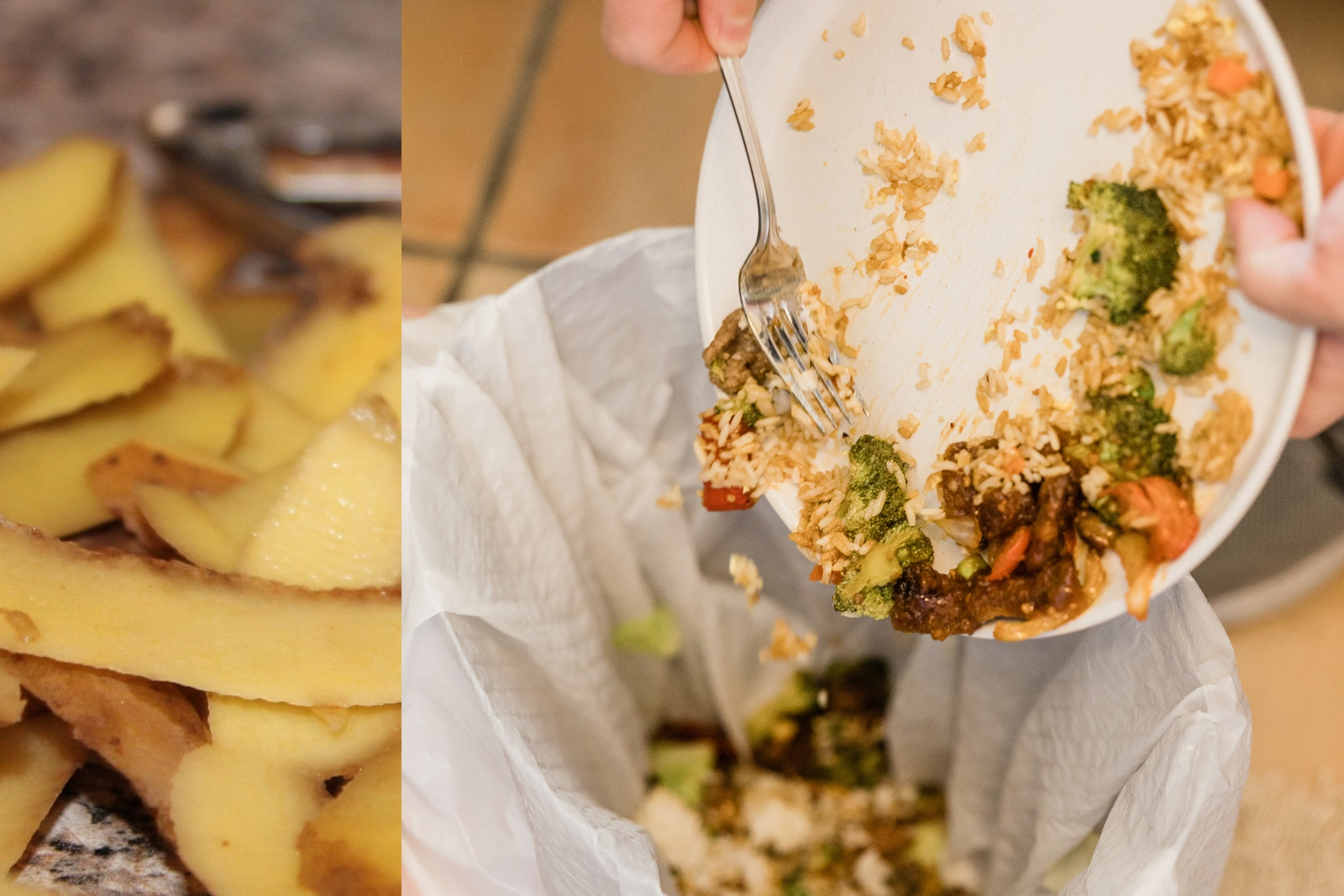
In today’s world, where chemical fertilizers have a negative impact on soil and human health, kitchen waste is a valuable resource. Everyday leftovers like vegetable peels, fruit scraps, and tea leaves are often thrown away, believing they are worthless. However, when used properly, these wastes can be transformed into highly effective liquid fertilizers for plants. This article explains how to make liquid fertilizer from kitchen waste cheaply and how to use it properly.
What is liquid fertilizer and why is it so important ?
Liquid fertilizers provide immediate nutrients to plants. They are quickly absorbed by the roots and leaves. Compared to solid fertilizers, liquid fertilizers have a faster effect and improve soil structure. They are also environmentally friendly, reducing the need for chemical fertilizers. Liquid fertilizers are therefore ideal for home and urban gardens.
Liquid fertilizers provide nutrients to plants in a water soluble form, quickly reaching the roots and leaves, and immediately providing them with the nutrients they need. Compared to solid fertilizers, liquid fertilizers dissolve faster in the soil, making them more effective.
The most important role of liquid fertilizers is to promote rapid and healthy plant growth. Nutrients such as nitrogen, phosphorus and potassium strengthen the roots, maintain leaf color and promote flowering and fruit production. Liquid fertilizers also stimulate beneficial microorganisms in the soil, improving its long term fertility.
Liquid fertilizers are becoming increasingly important today because they can be made from food waste, reducing the dependence on chemical fertilizers and are environmentally friendly. When applied in the right amount and at the right time, they provide plants with balanced nutrients, making gardening easy, economical and sustainable.
Benefits of liquid composting with food waste
Liquid compost made from food waste has many benefits. Firstly, it is completely natural and harmless to plants and soil. Secondly, it helps reduce household waste and contributes to environmental protection. It also promotes plant growth, flowering and improves fruit quality.
Liquid composting is a natural and environmentally friendly way to convert food scraps into liquid fertilizer. Its main advantage is that it optimizes household organic waste and reduces waste disposal problems. This liquid fertilizer, made from fruit and vegetable peels, tea leaves and food scraps, provides immediate nutrition to plants.
Plants quickly absorb the fertilizer produced by liquid composting, which promotes growth. The natural nutrients improve soil fertility and activate beneficial microorganisms. This results in stronger roots and lusher foliage.
Another important advantage of liquid composting is the reduced need for chemical fertilizers, which saves soil and water while benefiting your health. In addition, this method is easy to implement in small spaces, making it ideal for apartments and townhouses.
Key benefits include :
- Efficient and sustainable use of food waste
- Improved soil fertility and increased beneficial microorganisms
- Savings on fertilizer costs
- Safe and effective solution for home gardening
- Materials needed for liquid composting
Liquid composting does not require any special or expensive ingredients. Since most of the necessary ingredients are readily available in your kitchen, this method is simple, easy to use and suitable for everyone.
Materials needed:
- Vegetable and fruit peels
- Tea leaves or coffee grounds
- Burnt sugar (for fermentation)
- Water (tap water or rainwater)
- Plastic or ceramic container with a lid
Making liquid compost from food waste
Making this compost is very easy. First, shred the food waste to speed up the decomposition. Then, place it in a container, fill it with water, and add a little brown sugar. The brown sugar promotes fermentation. Then, seal the container tightly so that the gases can escape.
Important steps :
- Store the container in a cool, dark place, away from direct sunlight.
- Stir every two to three days.
- The compost will be ready in 10–15 days.
Filtering and storing liquid compost
Once the mixture has fermented completely, it must be filtered. Unfiltered compost can cause unpleasant odors and mold in the soil. Therefore, strain the liquid fertilizer through a clean cloth or sieve. Filtered liquid fertilizer can be stored in an airtight container, but use it within a month to prevent nutrient loss.
Correct use of liquid fertilizer
Proper use of liquid fertilizer is very important for plant health. This means that this fertilizer must be diluted before application. A typical ratio is 1 part liquid fertilizer to 10 parts water.
Proper use of liquid fertilizers is essential to promote healthy plant growth and prevent damage. Highly concentrated liquid fertilizers can damage roots and leaves, so be sure to dilute them with water before use. A typical mixture is 1 part liquid fertilizer to 10 parts water. Apply fertilizer directly to the soil around the base of the plant or lightly dust the leaves in the morning and evening. For optimal results, we recommend fertilizing every 10 to 15 days. Regular and correct fertilization helps plants absorb nutrients and promotes strong, healthy growth.
Application:
- Repeat the application every 10-15 days.
- Pour the fertilizer into the soil to nourish the roots.
- Spray on the leaves with a spray bottle.
Which plants is this fertilizer suitable for? This liquid fertilizer is suitable for almost all types of plants. It is particularly effective for vegetables, flowers and ornamental plants. It also promotes flowering and fruiting in fruit trees.
Suitable for:
- Vegetables such as tomatoes, peppers and coriander
- Flowers such as roses, marigolds and petunias
- Ornamentals such as pothos and sansevieria
summary
Making liquid compost from food waste is an environmentally friendly and cost effective way to provide plants with natural nutrients. Vegetable peels, fruit scraps, tea leaves and other materials are rich in essential plant nutrients. When water is added and the mixture is allowed to ferment, it transforms into highly effective liquid compost.
This compost is easily absorbed by plant roots and leaves, promoting growth, lush foliage and improving soil health. It also promotes the activity of beneficial microorganisms in the soil, reducing the need for chemical fertilizers. Composting food waste is an easy and effective way to reduce organic waste at home, protect the environment and support sustainable agriculture.